logosmall.gif (2710 bytes)


Nina smiling, January 2005

Nina Swanson, January, 2005
John and Nina

Nina at show
 

Nina Swanson


Nina began collecting postcards with cats in the early 1970's as a diversion so that she wouldn't be bored when accompanying John to stamp shows.  Her appreciation for things of beauty was evidenced in the way she built her collection.  The pleasure she found in shopping and keen eye for quality also was applied to postcards.  Nina soon expanded her collecting interests and also bought accumulations when they were available.


John and Nina started selling stamps and covers at local small shows in 1990.  Postcards were a minor sidelight.  By 1993 the situation was completely reversed.  They were selling only at postcard shows and covers were a minor part of their stock.  Nina was eager to learn all she could about her trade, absorbing all the knowledge available, in particular she creditied Roger LaRouque as her mentor. Nina's interest in the beauty of Victorian images continue to grow with her collection expanding to advertising trade cards, Valentines, and die cuts.


For the next 14 years John and Nina averaged over 20 weekend postcard shows a year, mostly in California but also traveling to the Northwest and Arizona.  Nina was a loved member of the postcard community.  She always had a warm greeting for everyone and also took care to say goodbye to her fellow dealers at the end of every show.


A beautiful fan from Nina's collection.

One of Nina's elegant Victorian fans


I have no plans to sell at postcard shows in the future.

I will be selling on
eBay logo
and will retain our seller name of:
"johnninaswanson"


Vintage Picture Postcards

Although postcards of all periods are collected, most of the collectible cards were printed between 1898 and 1916. Thus the adjective "vintage". 1898 was the year that Congress officially recognized and established rates for privately printed cards. Shortly thereafter racks of postcards could be found in shops of all kinds. Collecting became a craze, lasting for almost 20 years.

The Great War put a halt to the importation of the exquisitely printed German cards. Proliferation of the telephone greatly reduced the need for postcards as an inexpensive, handy method of communication. Social patterns were also changing. It was the end of the Golden Era of Postcards. But so many cards were saved that we have the pleasure today of accumulating cards on almost any topic.

Many cards printed (or published, as deltiologists prefer) after 1916 are also sought by collectors. And postcard collecting is booming once again.

State Girl
Christmas
Real Photo

Advertising Trade Cards

Printed cards have been used for advertising since the early 19th century. With the evolution of stone lithography to a practical commercial art in the 1870's, colorful trade cards became commonplace. Children would beg their mother to take them to the store to buy a book or toy with a view to acquiring the latest card for their scrapbook.

Although most trade cards approximate a post card in size, they can be found in shapes from circles to the highly prized pickle-shaped Heinz cards. The image is usually related to the product but printers offered inexpensive stock cards with only the message pertaining to the product. Advertising trade cards comprise an extremely diverse and interesting collecting area.

Girl with Cat
The Little Doctor
Engle Clock

Victorian Die Cuts

Die cuts comprise another example of the art of lithographic printing of the late 1800's. They were printed solely to be collected. After printing most were embossed and then cut to shape with a steel press.

Die cuts come in all sizes. The smaller ones are commonly referred to as scrap. Thus the term scrapbook. Typical Victorian era scrap books consist of trade cards with die cuts used as decoration.

Girl with Dog
Birds

Postal History

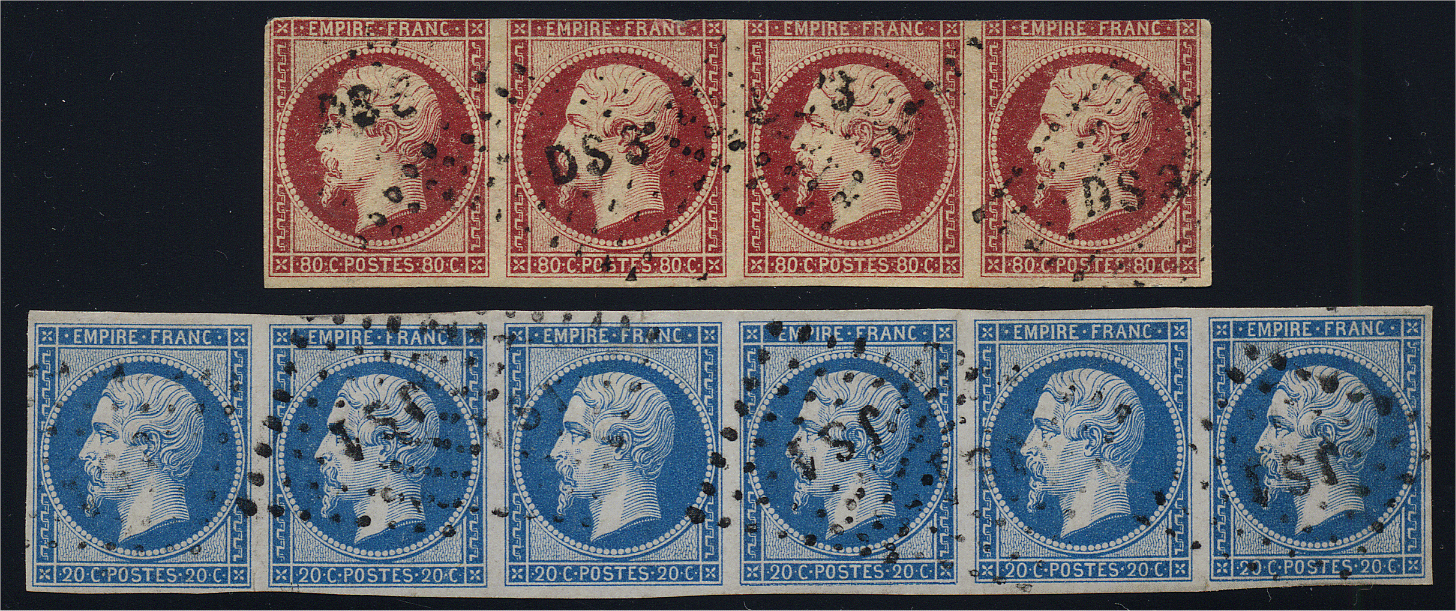
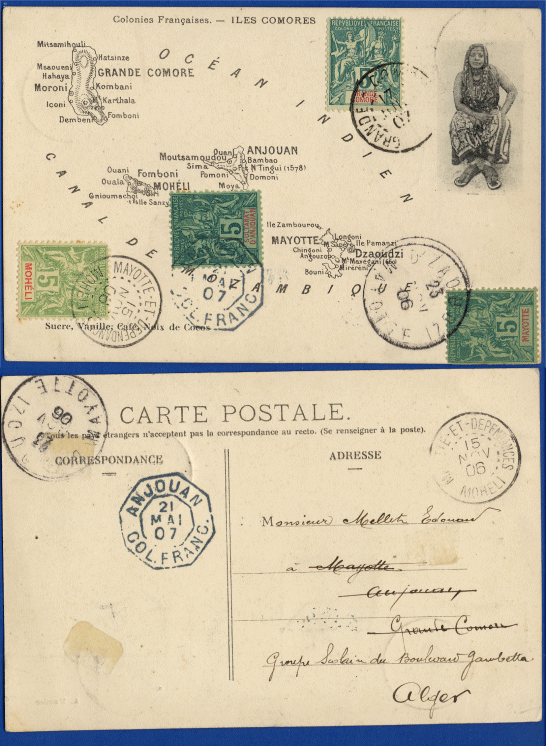
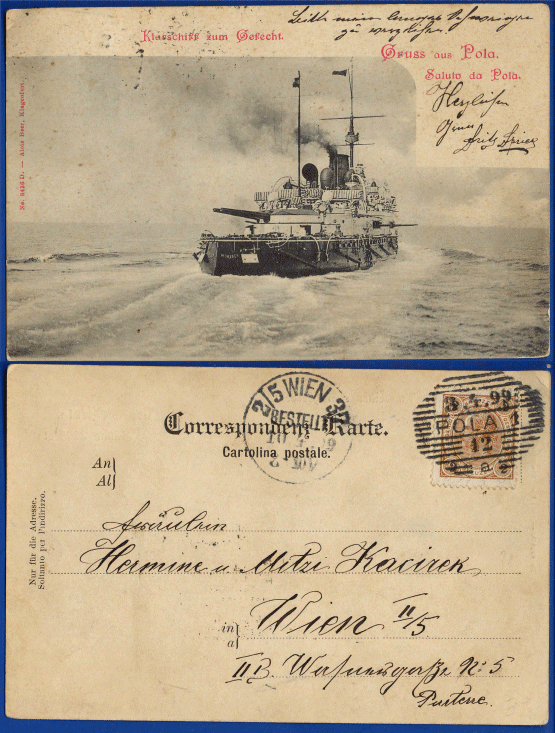
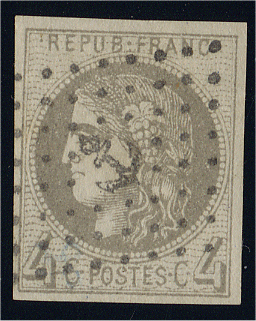
Postal history is the term used to identify a card or envelope which has been through the postal system and has stamps or cancels which have interest to collectors. On occasion the reverse side of a picture postcard is more interesting than the picture side because of an unusual postal marking. The stamps are rarely of any interest because the postal rates for a postcard are the lowest for any mail.

Early Airmail
Zeppelin Flight

Cigar Labels

Cigar labels represent the finest examples of stone lithography. They were used to help sell cigars by attracting the customer with a colorful, interesting design. Small labels were used on the outside of the cigar box and a larger label of the same motif was used for the inside. The tobacconist displayed his wares in glass cabinets with the boxes open to entice the smokers. The designs were so appealing and desirable that printers eventually produced labels solely for collectors.

Outer Label
Inner Label

Cigar Bands

The function of a cigar band is to help prevent the tobacco leaf from unraveling. Originally the center oval contained only the cigar brand name. Later they became as decorative as the labels which adorned the boxes, with a miniature of the box theme. Eventually bands were specially printed just for collecting, many in sets such as presidents of the United States. The world's greatest collection has over 165,000 different cigar bands!


Valentines

Valentine's Day is celebrated in many countries and various ways. It dates back to the 3rd century, named for the Roman priest Valentinus renown for good deeds. Handmade Valentine cards began to appear in the early 1600's. By 1840 multi-layered cards with paper lace were being produced commercially. Original cards sold for as much as $50! Valentine cards from all eras are collectible, from the classics of the 1800's to Disney cards of our time. The desirability and therefore price depends upon condition, topic, artist, size, and an intangible beauty and cuteness.

Foldout
Kids and Flowers
Cutout

Billheads

The elegant, relatively inexpensive printing of the late 1800's and early part of this century found its way onto letterheads and invoices. The more interesting ones are collectible and are referred to by the term billheads. Some intricate designs might use as much as a quarter or more of the page. Frequently the merchant would also use pictorial envelopes which served as an advertisement for his wares.


Back to Main Page

e-mail us at jns (at sign) johnninaswanson (dot) com

Last update: Jan 26, 2007